Kyoto Itinerary: The Perfect 3 Days for First-Timers

Three days is enough to fall for Kyoto — temples and bamboo groves, vermilion torii gates, and quiet streets where geisha still hurry to work. This is the exact 3-day Kyoto itinerary we give first-timers, paired neatly with Tokyo so you see the best of both.
Before you go: quick setup
Two small things make Kyoto effortless. Sort them before you arrive:
- An IC card for buses and trains — see our Suica guide (it works in Kyoto too).
- Data on arrival — a Japan eSIM keeps maps and translation working from the moment you land.
Day 1 — Southern Higashiyama: temples & geisha streets
Start with Kyoto’s most atmospheric quarter, best walked in the morning light.
Morning
Climb to Kiyomizu-dera, the wooden temple on stilts with sweeping city views, then wind down the preserved lanes of Sannenzaka and Ninenzaka, lined with tea houses and craft shops.
Afternoon & evening
Drift through Gion, the historic geisha district, and the willow-lined Shirakawa canal. Stay for dusk — lanterns glow and you may glimpse a geiko or maiko on her way to an appointment.
Gion’s side streets are residential and camera rules are strict. Be respectful, keep your distance from geisha, and skip the private alleys marked with no-photography signs.
Day 2 — Arashiyama & Fushimi Inari
Kyoto’s two most iconic scenes in one well-planned day. Start early to beat the crowds at both.
Morning: Arashiyama
Walk the Arashiyama Bamboo Grove at opening time, when the light filters through and the paths are quiet. Nearby, Tenryu-ji temple and its garden are worth the short stop.
Afternoon: Fushimi Inari
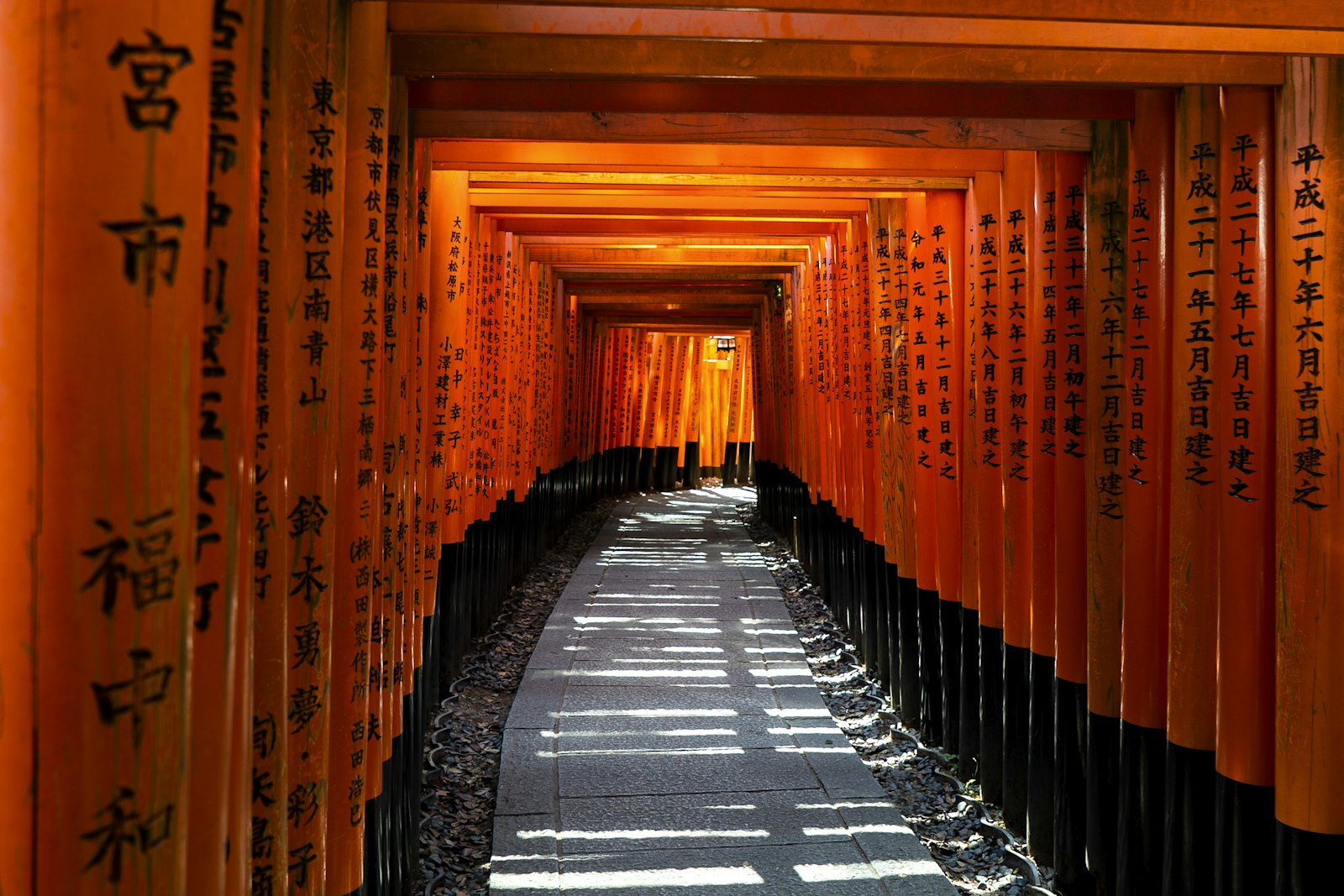
Head to Fushimi Inari Taisha and its endless tunnels of vermilion torii gates climbing the mountainside. Walk at least as far as the Yotsutsuji intersection for the view back over the city — most crowds thin out the higher you go.
Day 3 — Golden Pavilion, market & castle
Save a mix of icon, flavor, and history for your last day.
- Kinkaku-ji — the Golden Pavilion shimmering over its reflecting pond.
- Nishiki Market — “Kyoto’s kitchen”, five blocks of food stalls, pickles, sweets, and historic knife shops.
- Nijo Castle — shogun-era halls with famous “nightingale” floors that chirp underfoot.
Nishiki Market is the place for Japanese kitchenware — especially hand-forged knives and, if you’ve got room, a proper rice cooker. See our guide to the best Japanese rice cookers worth buying (and the voltage trap to avoid before you pack one).
Getting to Kyoto from Tokyo
The Tokyo–Kyoto Shinkansen takes about 2 hours 15 minutes and is the spine of the classic “Golden Route”. If you’re combining cities, this is exactly where a rail pass can pay off — run the numbers in our JR Pass guide. Doing Tokyo first? Pair this with our 5-day Tokyo itinerary for a perfect 8-day trip.
Where to stay in Kyoto
For first-timers, base yourself around Kyoto Station (easy transport) or Gion / Higashiyama (atmosphere, walkable to Day 1 sights). A traditional ryokan with its own bath is a memorable splurge for one night.
Find your Kyoto base
Compare flexible, free-cancellation stays near Kyoto Station and Gion — the two easiest areas for a first visit.
Want a day trip? Add Nara
If you have a spare day, Nara is under an hour away — giant bronze Buddha, ancient temples, and a park full of bowing deer. Or hop 15 minutes to Osaka for a street-food night out — see our Osaka food guide. Both pair naturally with this itinerary.
What will 3 days in Kyoto cost?
| Style | Per day (excl. transport to Kyoto) | What it looks like |
|---|---|---|
| Budget | $60–100 | Guesthouse, market food, buses |
| Mid-range | $140–230 | 3-star hotel, restaurant meals, the odd taxi |
| Comfort | $350+ | Ryokan night, kaiseki dining, private guide |
Frequently asked questions
Is 3 days enough for Kyoto?
Yes — three days covers the major temples, Arashiyama, Fushimi Inari, and a market day at a comfortable pace. Add a fourth day for a Nara or Osaka trip.
Should I visit Tokyo or Kyoto first?
Most travelers do Tokyo first (you’ll likely land there), then take the Shinkansen to Kyoto. Either order works well.
Do I need a JR Pass for Kyoto?
Only if you’re covering long Shinkansen distances between cities. Within Kyoto, local buses and an IC card are all you need. See our JR Pass guide for the math.
When is the best time to visit Kyoto?
Spring (cherry blossoms) and autumn (foliage) are stunning but busy. Early morning visits and shoulder-season dates help you dodge the biggest crowds.